Tips & tricks · Apps · Mobile · ~5 min a week · 3 min read
Shared family passwords: no more sending them over chat
Last reviewed:
In this article
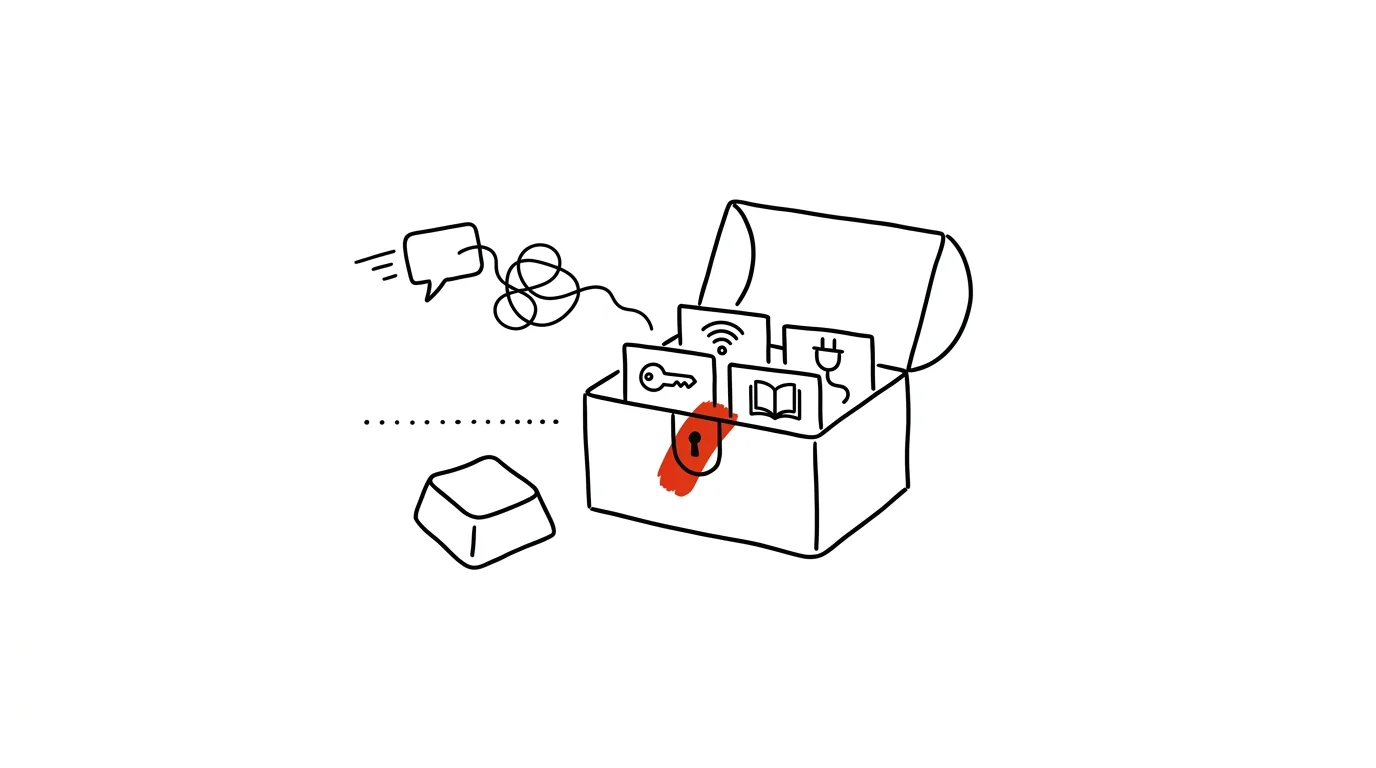
“What's the Netflix password?” — and the password flies through chat, where it lives forever, or gets dictated over the phone and comes out wrong the second time. Family passwords — streaming services, the utility provider, a store account with credit, the kids' school system — need to reach several people, but usually live only in one person's head or password manager. Both major platforms can now share passwords in a controlled way: you set up a shared group, and selected passwords are visible to, and auto-filled for, every member. When one person changes a password, it updates automatically for everyone else.
How to do it
iPhone (Passwords, iOS 17 and later):
- Open the Passwords app (on older versions, Settings → Passwords) and choose New Shared Group.
- Name it “Family” and invite members — if you use Family Sharing, they'll be suggested automatically.
- Choose which passwords to move into the group. Only those get shared; everything else stays private.
Android (Google Password Manager):
- In Settings → Google → Password Manager, open a saved password and choose Share — you can share it with members of your Google family group.
Standalone password managers (Bitwarden, 1Password, and others) offer family plans with shared vaults — same principle, and it works across platforms when half the family has an iPhone and half has Android.
One key detail: only share accounts that are genuinely shared. A personal email or bank account never belongs in a shared group.
A typical scenario
A family changes their streaming service password because their son's friend got hold of it at some point. In the old days, that meant a whole cycle: send the new password to three people over three different channels, it doesn't get entered right for two of them, one saves it wrong and asks again a week later. With a shared group, Mom changes the password in one place — and it auto-fills on all three family devices the next time anyone logs in. Nobody sent anything, and the password never sat in a chat.
A bonus: you no longer need weak, memorable passwords just for the sake of sharing. The group can carry a long generated password nobody in the family ever actually sees, let alone has to read out loud.
What you get out of it
Passwords disappear from text messages and sticky notes — the most common way family passwords leak out. Changing a password stops being a communication project. And the family can finally use strong, unique passwords even for shared accounts, because nobody has to copy them down by hand. When you just need to quickly find a password for yourself, the tip Your Browser Can Reveal a Forgotten Password helps.
Pro tip
A shared group is also an elegant solution for two-factor codes on joint accounts: when a verification code is generated for a password stored in the group, it fills in for every member — no more “did the SMS with the code arrive? forward it to me.” And when a member leaves the group (typically a grown-up kid moving out), you have a single place to see at a glance which passwords it's time to change.
Want to go deeper? The handbook has a whole chapter on it — The app categories that matter.
Similar tips
In-depth guide · 57 min
Miracle supplement, or marketing? Verifying health claims with AI and PubMed
A complete guide with 24 prompts: how to run a claim from an ad, a chain email, or Instagram against real studies through the PubMed connector, how to read abstracts with AI, tell a weak study from a strong one — and turn it all into a family registry of verified claims instead of endless googling.
In-depth guide · 20 min
Entrance Exams with AI: A Plan, Practice, and Mistake Analysis
A guide with prompts: a schedule built backward from exam day, official practice tests, mistake analysis by cause, and a parent role without pressure.
In-depth guide · 55 min
Selling a home with AI as a system: from paperwork to handing over the keys
A complete guide with 24 prompts: selling a flat yourself — the flat's paperwork as one source of truth, from which you derive the listing copy, a website, ads, buyer tracking, viewings, and negotiation. And one hard line, stated plainly: a lawyer writes the contracts, not AI.
Was this helpful?
Liked this tip?
I send one like it every week by email. Two minutes to read, hours saved.
The Top 30 tips e-book, free — it lands in your inbox right away.
Then 1 tip a week · no spam · unsubscribe in one click
Prefer a system to single tips? The free email course — seven days, seven emails, one skill a day.