Tips & tricks · Workflow · Everywhere · ~2 h per exam · 3 min read
Cornell Notes, Stripped Down: A Folded Margin and a Summary Line
Last reviewed:
In this article
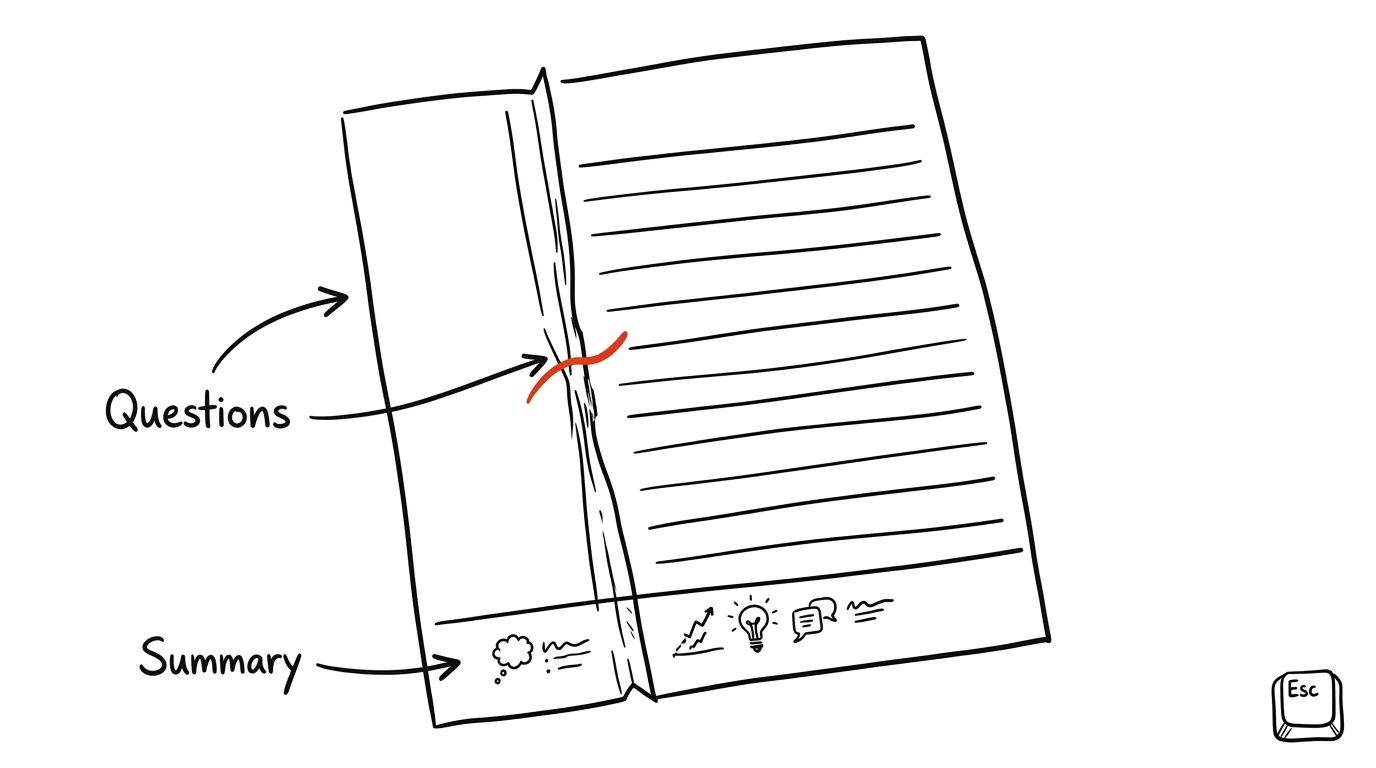
Most notes are dead text: you write them down during a lecture and passively read them before the exam, which is the least effective way to learn. The Cornell method turns them into a self-testing tool — and its core is so simple it needs no template or app at all. Just fold the left margin of the paper (or make a narrow column in a document) and leave three blank lines at the bottom. The magic isn't in the page layout, it's in what you write in those two spots an hour later.
How to do it
- Before the lecture, fold the sheet roughly a third of the way across, or set up a two-column table in your notes app with a narrow left column. Leave room at the bottom for two or three lines.
- During the lecture, write only in the wide right column — normally, in note form, however you're used to. Leave the left margin empty. That's the entire change during class: none.
- Within 24 hours of the lecture (on the way home works fine), go back through your notes and write questions in the left margin that the right column answers: "When does the second law of thermodynamics apply?", "Three causes of inflation?" Not terms — questions.
- At the bottom, write a one- or two-sentence summary of the whole page in your own words. If you can't, that's a sign you don't understand the material — better to find out now than the night before the exam.
- When reviewing, cover the right column with your hand and answer only the questions from the margin. Your notes have become a practice test.
A typical scenario
A student has twenty pages of macroeconomics notes. Without the margin, she'd read them three times before the exam with a feeling of "I already know this" — and find out on the test that recognizing text isn't the same as being able to answer a question. With questions in the margin instead, she works through the pages with the column covered: what she can answer, she skips; what she can't, she flags. Within an hour she has a precise map of what she still doesn't know — and studies only that.
What you get out of it
Ten minutes after each class saves you hours before the exam, because review happens through recall, not reading. The summary line acts as an instant comprehension check. And the questions in the margin are ready-made material for studying in pairs — one person reads the questions, the other answers. Why recall works so much better than rereading is explained in the tip close the notebook and recall.
Pro tip
Before the exam, go through every page and copy out just the questions from the left margins into a single list — you'll end up with your own practice test for the entire subject, sorted by topic. If you take notes digitally, do the same with a two-column table in Docs or Notion; on a tablet with a pen, just leave a wider margin. The format doesn't matter — what matters is that every page of notes can be "tested" with the right half covered.
Want to go deeper? The handbook has a whole chapter on it — Core systems: inbox, priorities, reviews.
Similar tips
Timeboxing: put your tasks straight into the calendar
A task with no time attached is just a wish. Drag your tasks into concrete calendar slots — and give your day a budget, like money.
The Todoist Inbox: everything goes in, sort it out later
Ideas and tasks drop into your Inbox without a second thought about where they belong. Once a day, you empty it — into projects, or into the trash.
Track your week: where your time actually goes
A week with a time tracker (Toggl and similar) reveals the gap between what you think you do and reality. It's usually a shock — and the start of a change.
Was this helpful?
Liked this tip?
I send one like it every week by email. Two minutes to read, hours saved.
The Top 30 tips e-book, free — it lands in your inbox right away.
Then 1 tip a week · no spam · unsubscribe in one click
Prefer a system to single tips? The free email course — seven days, seven emails, one skill a day.