Tips & tricks · Workflow · Everywhere · ~2 hrs per exam · 3 min read
Close the book and recall: the most effective study technique
Last reviewed:
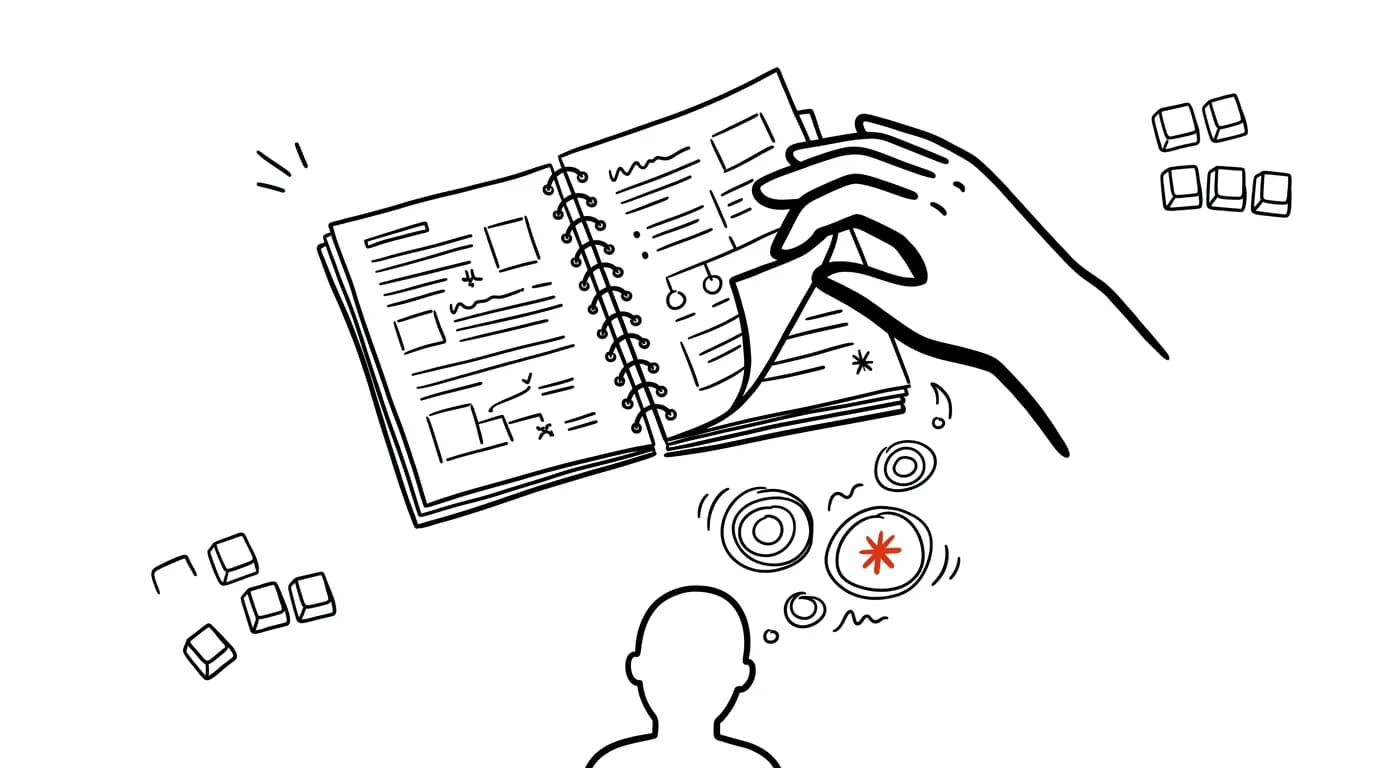
The science is clear: testing yourself beats re-reading, hands down. It sounds almost counterintuitive — why would quizzing yourself work better than really studying the material thoroughly — but research on active recall shows the same result over and over: someone who tries to remember what they learned after reading it retains it far longer than someone who reads their notes three times in a row.
A typical scenario
Student Jakub studies for an exam the classic way — reads a chapter three times, underlines the important parts, and feels like he “knows” the material because everything makes sense while he's reading it. At the exam, though, he finds he can't recall even basic terms — fluent reading creates an illusion of knowledge, not actual knowledge.
With the same amount of time invested in active recall, the result is different: after reading a chapter, he closes the book and tries to write down everything he remembers. The first attempt is frustrating and full of gaps — and those gaps are exactly the most valuable thing to come out of the whole exercise, because they show precisely what still needs work.
How to do it
- Read a chapter or a section of your notes normally, the way you'd study any other time.
- Close the book or material — no peeking, no “I'll just check real quick.”
- On a blank sheet of paper, write down everything you remember: the structure of the topic, key terms, the connections between them, and if you can, explain in your own words how the different parts relate to each other.
- Open the source and compare what you wrote against the original. The differences and gaps are exactly what you still need to learn — not a reason to feel frustrated, but a useful map of where to focus your next round of study.
- Study specifically what the comparison showed was missing before moving on to the next chapter — skipping ahead with unresolved gaps is usually the first thing that shows up on a test.
- Revisit chapters or topics where the gaps were large after a few days, using the same process again — repeated active recall spaced out over time works better than a one-off attempt.
The best tools
- Plain paper and a pen — the simplest and most accessible tool, no app required.
- Anki — a free spaced-repetition app, ideal for terms and facts you need to remember long-term.
- Quizlet — quick flashcard creation and self-testing, best suited for definitions and vocabulary.
- RemNote — a note-taking tool with built-in flashcards generated straight from your notes, combining note-taking and active recall in one place.
What you get out of it
- A result that matches the real exam: active recall mirrors what actually happens at the exam — you have to remember without the text in front of you, not just recognize the right answer among the options.
- More efficient time: the same number of hours spent on active recall produces measurably better results than repeated passive reading.
- A realistic picture of what you actually know: gaps show up immediately, not at the exam when it's too late to fill them in.
- Less stress before the exam: you know exactly what still needs work, instead of a vague feeling of “hopefully this will be enough.”
- Longer-lasting knowledge: what you actively recall, your brain retains for significantly longer than what you merely read and recognize.
Pro tip
The same principle works out loud too: try explaining the material to an imaginary listener, as if you were teaching it to someone else. The point where you stumble and don't know how to continue is exactly the point you don't actually know — even if it felt obvious while you were reading it.
Want to go deeper? The handbook has a whole chapter on it — Core systems: inbox, priorities, reviews.
Similar tips
Hide the Dock and reclaim a slice of your screen
Cmd+Option+D
Cmd+Option+D hides the Dock. On a laptop that gets you a noticeable strip of extra screen — the Dock slides out only when you want it.
Emoji and special characters with one key
Ctrl+Cmd+Space
The 🌐 (fn) key or Ctrl+Cmd+Space opens a panel of emoji and special characters — with built-in search.
Frozen app? Force quit without restarting
Cmd+Option+Esc
Cmd+Option+Esc is macOS's version of Ctrl+Alt+Delete. Quit a frozen app in three seconds.
Was this helpful?
Liked this tip?
I send one like it every week by email. Two minutes to read, hours saved.
The Top 30 tips e-book, free — it lands in your inbox right away.
Then 1 tip a week · no spam · unsubscribe in one click
Prefer a system to single tips? The free email course — seven days, seven emails, one skill a day.