Handbook · Freelancing · 15 min read
Getting work without burning out on sales
Last reviewed:
Most people working for themselves hate business development and put it off until it's too late. A pipeline instead of a binary have-work-or-don't, sorting lead sources by effort and quality, a portfolio that sells for you, and a standing block instead of panic.
In this article
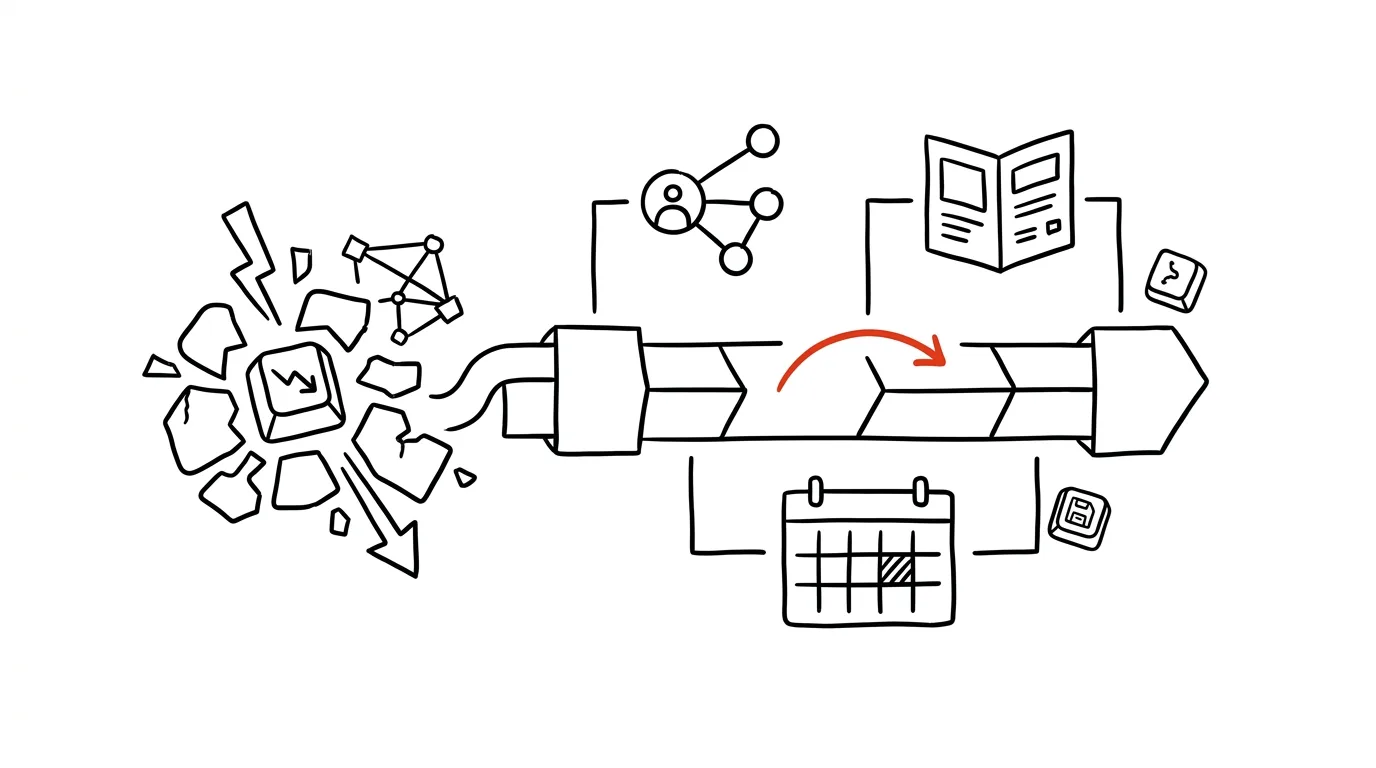
There's a moment almost everyone who works for themselves knows. A big project wraps up, the last invoice goes out — and suddenly the calendar is empty. Only then does the search for the next job begin: a few emails go out, the profile gets refreshed, a post goes up saying you have open capacity. But the road from first outreach to a signed contract runs for weeks. The empty calendar you're looking at today was created about two months ago, when you were swamped with work and had no time for business development.
This cycle then repeats. Periods of being swamped, when nothing gets done for the future, alternate with periods of emptiness, when business development is desperate and therefore ineffective — because it shows when someone urgently needs the work, and their negotiating position is zero. The result tends to be badly paid work for a client you'd never have taken on under any other circumstances.
Getting work isn't a one-off activity you use to fix a crisis. It's a standing operation that runs independently of how much work you currently have — and the only way to keep the ability to choose. Capacity and its price, the subject of the previous chapter, Time as inventory, only make sense when there's something to choose from. This chapter is about how you generate demand without turning it into an activity you hate.
The sales skill nobody taught you
Most people working for themselves got where they are through their craft. They can design, code, write, shoot photos, teach, do the numbers. Nobody taught them sales, and in many professional circles it has a bad reputation on top of that — something done by people who can't do anything else. That creates the first obstacle: business development doesn't register as part of the expertise, but as a necessary evil that taints the purity of the work.
The second obstacle is more personal. When you're pitching someone else's product and the client says no, they rejected the product. When you're pitching yourself and the client says no, it feels like a rejection of you, your craft, and your price. Rationally you know it's usually not about you — the client has no budget, other priorities, or already has someone. Emotionally it works differently, which is why business development gets postponed. It isn't laziness, it's avoidance of an unpleasant emotion — exactly how procrastination works on any other task.
The third obstacle is a distorted picture of what sales actually is. Most people picture the most unpleasant experience they've ever had — a phone call interrupting dinner from someone trying to talk them into something they don't want. But independent services almost never sell through persuasion. They sell because, at the right moment, you meet someone with a problem you can solve, and they already know about you. Most of the work you can put into this is making sure that person knows about you before the problem shows up.
The reframe that helps most is this: you're not persuading people to buy you — you're sorting who you can help and who you can't. That has a practical consequence. When you talk to someone about possible work together, your job isn't to impress — it's to find out whether there's a real problem, a budget, and a reasonable brief. A conversation that ends in the realization it doesn't make sense isn't a failure. It's two months saved.
A pipeline instead of “have work or don't”
The most common way people working for themselves track their business situation is binary: either they have work, or they don't. That view is a source of panic, because it changes in a jump — overnight from “have” to “don't,” with no warning.
The sales-world alternative is called a pipeline: the idea that leads move through a sequence of stages, and at any given moment you have several of them sitting at different points. It isn't sophisticated — a spreadsheet or a task list will do. What matters is that instead of one binary piece of information, you have visibility into a flow — and a flow can be watched ahead of time.
- 1ContactSomeone knows you exist. No lead yet, just a relationship or a mention. Most of your network sits here.
- 2SignalA hint of a need appears: a question, a comment, a shared problem. Not a brief yet.
- 3LeadThe client is asking specifically. This is where you check scope, timeline, budget, and whether it even makes sense.
- 4ProposalA sent proposal with scope and price. The clock starts running from here, and this stage covers follow-ups too.
- 5AgreedConfirmed scope, timeline and terms. Only now can you count on the money.
- 6After deliveryWrap-up, feedback, asking for a referral. The cheapest source of your next job is the one that's just ending.
The pipeline's practical value comes down to two things. The first is lead time: when you notice, every now and then, that nothing's sitting at the top, you know it two months before you feel it in your bank account. An empty “signal” column is a warning; an empty calendar is already the consequence. The second is calm about rejection. When there's only one thing in the works, every no is a catastrophe, and it shows in the pressure you carry. When there are six things at different stages, a no is a routine operational event. That, paradoxically, raises your success rate too — you talk about money very differently with a client you don't desperately need.
A pipeline doesn't need any software. A list with five columns is enough: who, what stage, when you last had contact, what the next step is, and when you'll do it. The last column is the most important. Most leads don't die because the client said no — they die because two months went by after a proposal with neither side saying anything, and the thing quietly rotted away.
Sorting lead sources by effort and quality
Sources of work aren't equal. They differ in how much effort it takes to land one job, and in what kind of clients they bring in — and the two usually correlate in the opposite direction from what you'd want.
Referrals are, without competition, the best source. The client arrives with trust already established, price rarely gets negotiated, and the process is short. The downside is that you can't switch it on — you can only cultivate it. In practice that means two things: doing the work in a way that's worth recommending, and explicitly asking for the referral. Most satisfied clients won't refer anyone, not because they don't want to, but because it doesn't occur to them. The line “if you think of anyone this would suit, I'd be glad for the introduction” at the end of a successful project is the cheapest business development there is.
Your own network — former colleagues, classmates, people in your field — works similarly, just with a longer lag. Crucially, it can't be activated in a single shot. Someone who only reaches out when they need something will burn through their network in two attempts. Someone who stays in touch regularly, and occasionally recommends or helps someone else, has a source that works for years.
Content and visibility means people know about you before they need you: articles, talks, posts in professional communities, a newsletter, samples of your work. It has the slowest start of all the sources — for the first few months, seemingly nothing happens — but it's the only one that keeps working even when you aren't. The main pitfall is sustaining it: most people give up before it pays off. Batch production from a single theme helps here, as described in the tip The content factory: thirty outputs from one pillar — and with AI, the same rule applies here that runs through every recommendation on this site: AI proposes, a human approves. Anything that goes out under your name, you have to read and stand behind.
Platforms and marketplaces have the opposite profile: they start working fast, because the demand is already there. The cost is competition ranked mainly by price, a cut taken as commission, and a client relationship that half-belongs to the platform. As a starting source, or as a filler during a slow stretch, they make sense; as your only channel, they lead to work at a rate that won't support you. A résumé and profile tailored to a specific listing can be put together quickly — the tip A résumé and cover letter tailored to the listing shows how, and its logic — break down the brief, reframe your own experience in the client's language, never invent anything — works just as well for a platform pitch as for a job application.
Cold outreach — contacting people who don't know you — has the worst effort-to-result ratio and the highest emotional cost. It still has its place: it's the only source you can switch on instantly and aim precisely. The difference between cold outreach that works and outreach that goes straight to the trash is preparation. A generic message about everything you can do is spam. A message that makes clear you understand a specific company's specific situation and are proposing a specific thing is a proposal. Anyone can put together the groundwork for that in half an hour today — the tip Deep research: researching a market in an afternoon shows how to research a market and a company.
The practical conclusion isn't “do everything.” It's more like: have two sources that work over the long haul, and one you can switch on when you need it. Anyone standing on a single source — one big client, one platform, one network of contacts — doesn't have a business model, they have one big dependency.
A portfolio that sells for you
A portfolio is the only salesperson who works for you around the clock and wants nothing in return. But most portfolios can't sell, because they're built like a gallery: a collection of nice results with no context. A visitor sees what you produced, but doesn't learn the thing they actually need to know — whether you can solve their problem.
What makes the difference is a case study. Not a description of what you did, but the story of a change of state: what the client's situation was, what wasn't working, what you proposed and why, what was hard, and how it turned out. The last part is the most valuable and the most often missing — if you know a concrete result, state it; if you don't, at least quote what the client themselves said. Never invent results: in a small field it shows, and it costs more than any numbers could ever earn.
A good case study has one more property that gets underrated: it's written in the client's language, not the industry's. An expert describes the solution; a client is looking for their own problem. When they recognize themselves in the text — “that's exactly what we have” — the decision is already made before they get to your methodology. That's why the best structure is a headline that names the situation, not the technology.
Three to five well-written case studies beat thirty samples. It also protects you: a portfolio that clearly shows the type of work you do attracts matching demand and discourages the pointless kind without you having to turn anything down. The best portfolios also answer the things clients keep asking about — a rough scope of pricing, how the collaboration works, what you need from the client, how long things take. Every such answer is one call that didn't have to happen.
A portfolio needs one rule in order to get built at all: material for a case study gets collected during the project, not after it. The brief, the starting state, the key decisions, and quotes from communication — half an hour spent while wrapping up the project, while it's all fresh, saves a day of trying to remember it a year later. The tip Templates for proposals, contracts and invoices gives you the practical groundwork for giving project wrap-up a fixed shape.
The art of saying no
The ability to turn down a job is a business skill, not a luxury for the overbooked. A bad job doesn't just cost its own time — it blocks capacity for better work, drains energy you'd need elsewhere, and in the worst case damages your reputation, because a badly defined project turns out badly regardless of how well you work.
There are several signals worth paying attention to, and most of them show up before the contract is even signed.
- A vague brief that resists being clarified. Not every client knows how to brief a job — that's normal, and helping them with it is part of the service. The warning sign is when the brief actively resists clarification: “you figure it out” combined with a fixed price and deadline is a recipe for a project with no end.
- An unclear decision-maker. When it isn't clear who approves and who pays, you'll be doing a fresh round for everyone who weighs in later.
- Price as the only topic. A client who, from the start, cares exclusively about whether it can be cheaper will apply the same approach to scope, deadlines, and payment terms.
- A bad fit. Work you can do but don't want to, or a field you don't understand. Taking it on means delivering an average performance at full price — the worst outcome for both sides.
- History with a previous supplier. When the previous relationship is described as a total failure on the other side, with not even a hint of their own share in it, there's a decent chance the next such description will be about you.
But rejection is also the most sensitive moment in the entire relationship, because it decides whether that person ever comes back or refers you on. A simple format works: fast, without going into detail, and with a referral to someone else. Speed is a courtesy — a client who gets a no in a day can find another supplier; a client who gets it in three weeks has lost three weeks. And referring a colleague costs one sentence and pays off for years.
A special category is a job you'd take under different conditions. Here, instead of a rejection, a counterproposal makes sense: a different deadline, a smaller scope, a different way of working together. Surprisingly often it's accepted — and it's by far the best option for both sides. But before you get to signing, it's worth reading what you're actually signing; the tip The contract before you sign: what to check walks through a review pass.
Business development as a standing block, not panic
Everything described above shares one condition: it has to happen continuously. And it won't happen continuously until it has a place in the week — because business development is the one job, when you work for yourself, that nobody chases you about. Client deadlines carry pressure. Invoicing has a due date. Looking for the next job has nothing, so it always loses.
The only solution that works long-term is a fixed calendar block that holds regardless of workload. Two hours a week is usually more than enough, if it's actually kept. What matters isn't the length, but that it doesn't get canceled the week you're swamped with work — because that's exactly the week that decides whether things are empty two months from now.
For the block to be more than two hours of staring into space, it needs a predetermined agenda. A cheapest-to-most-expensive order works well: first go through the pipeline and send follow-ups on things that have stalled; then reach out to people you haven't talked to in a while, with no specific ask; then write or update one thing in your portfolio; and only then spend whatever's left on new outreach. Most of the results come from the first two items — but those are exactly the ones that never happen in a panic, when people just start shooting blind.
The remaining question is where to put the block. In practice, it fits well next to the other unbillable work covered in the chapter Time as inventory — that is, next to your standing admin slot, as described in the tip The Friday admin block. One hour of invoicing and one hour of business development in the same part of the week hold together better than two separate obligations that can each be postponed on their own. And the chapter Pomodoro and time blocking describes how to protect a block like that from interruptions.
A personal brand without self-promotion
The phrase “personal brand” has a deservedly bad reputation among most professionals, because it's associated with a particular style of self-presentation — self-congratulatory posts, inflated numbers, and would-be inspirational stories about your own journey. Anyone who doesn't want to do that usually concludes a personal brand isn't for them.
In reality, a personal brand is just the answer to what comes to people's minds when your name is mentioned. You have that answer either way — the only question is whether it's random, or whether it matches what you actually do. And it can be shaped in a way that has nothing to do with self-promotion: by working in public. Describing a problem you solved and how you got to the solution. Explaining something people in your field repeatedly misunderstand. Sharing a process you built. Nowhere in that list is a sentence about how good you are — and yet it works better than any self-praise, because the reader draws the conclusion themselves.
Narrowing your focus helps. An expert in everything doesn't stick in memory; someone associated with one specific topic does. People resist narrowing out of fear of losing business — in reality, usually the opposite happens: fewer leads come in, but they're more precise and better paid, because the client isn't looking for a generalist, but for someone to solve their specific problem.
Consistency matters more than volume. One solid piece of writing a month, kept up for a year, does more than thirty posts in one enthusiastic week followed by silence. If you use AI as a helper, keep an eye on whether the output sounds like you — generic-sounding output from a language model is recognizable, and it works against the effect you were going for. The tip Brand and voice with AI describes how to lock in your own tone and reuse it.
One last note: a personal brand isn't mandatory. There are people who have plenty of work from referrals and have never written anything public — and it's a legitimate model, as long as the referrals keep coming. The risk is just that such a model is harder to steer: when demand weakens, there's nothing to switch on. A bit of public visibility, in that sense, is insurance, not marketing.
Key takeaways
- An empty calendar starts forming two months earlier. Business development done only in a moment of need arrives late, is desperate, and leads to badly paid jobs.
- You're not persuading, you're sorting. A conversation that ends in the realization that a collaboration doesn't make sense is a success — it saved both sides months.
- A pipeline instead of a binary “have work or don't.” Several leads at different stages give you lead time before a slump and calm when saying no — which shows up in your pricing too.
- Sources aren't equal. Referrals and your own network have the best effort-to-result ratio; content works slowly but for the long haul; platforms are fast but pressure your price; cold outreach costs the most. Keep two standing sources and one you can switch on.
- Case studies sell, galleries don't. Situation, solution, result — in the client's language, with no invented numbers, with material collected during the project.
- No is a business skill. A vague brief with no willingness to clarify it, an unknown decision-maker, and price as the only topic are signals that show up before the contract is even signed. Reject quickly, and with a referral onward.
- Two hours a week that don't get canceled. A fixed block with a predetermined agenda beats any burst campaign — and what matters most is that it holds during the week you're busiest.
Want to keep the momentum?
One tip from the handbook by email each week — in an order that makes sense.
The Top 30 tips e-book, free — it lands in your inbox right away.
Then 1 tip a week · no spam · unsubscribe in one click
Prefer a system to single tips? The free email course — seven days, seven emails, one skill a day.